Friends of the Thomaston Opera House

Thomaston Opera House 158 Main Street Thomaston CT 06787
Thank You in advance for your Gift.
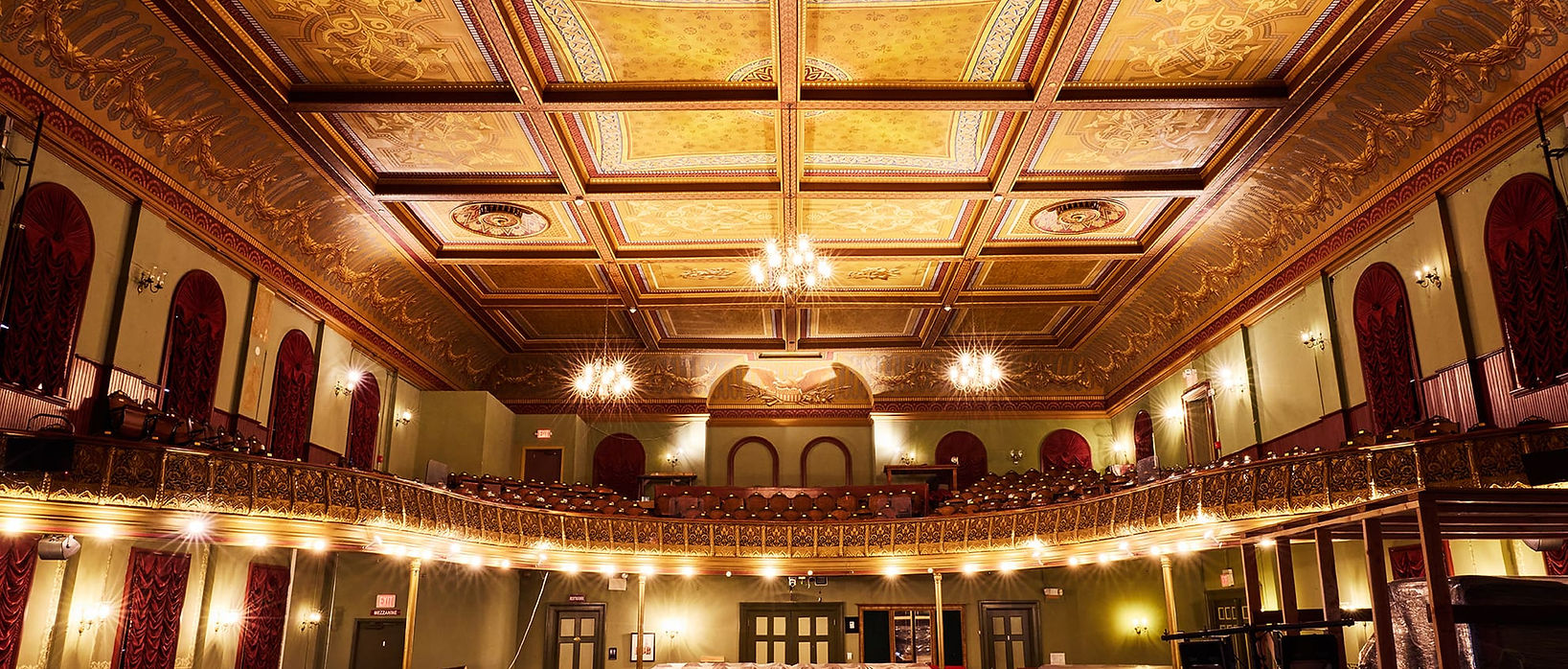

The Thomaston Opera House had it's Grand Gala Opening on October 4th, 1884. It was an unusually warm night that year and the gas lights at the foot of the stage Illuminated what was to become a journey into celebrating the best of Art, Imagination, Community and a Spirit of Adventure that continues to this day....
The Thomaston Opera House, built in 1884, stands as a cherished piece of Connecticut's rich cultural and architectural heritage. Notably, it is one of the few remaining sites visited by Father Michael J. McGivney during his lifetime. It is listed on the National Registry of Historic Buildings, dedicated by American Contralto
Marian Anderson.
| Early History | Historical Items
| Architecture | The Clocktower
Fr. McGivney at the
Thomaston Opera House
Father Michael J. McGivney stood many times on the stage of the Thomaston Opera House, lending his voice and presence to a space devoted to gathering, culture, and shared purpose. His appearance here reflects the Opera House’s early role as a center for ideas, faith, and community life—where speakers, performers, and neighbors came together under one roof. Preserving this historic stage honors not only its architecture, but the enduring legacy of how he helped shape its story.

Notable Shows/ Historical Items


Fr. McGivney - First "Community Theater" Director ?
St. Thomas Sunday School Children's Show
Directed by Fr. McGivney,
Courtesy Thomaston Historical Society
Passion, Dedication and Generosity,
Are the key ingredients that have saved this rare Historical treasure from extinction. Opera Houses of this type fell out of fashion in the early 1900's and seldom survived past the 40's. We owe a debt of gratitude to the Towns people and
theater lovers that refused to let it be demolished or repurposed through all years of disrepair, closures and the many times it was condemned for wiring and safety issues over it's 140 years. We are proud to say it has not only survived, but is now thriving as a testament to the power of caring, working together and serving a mission to preserve it as a legacy for future generations.
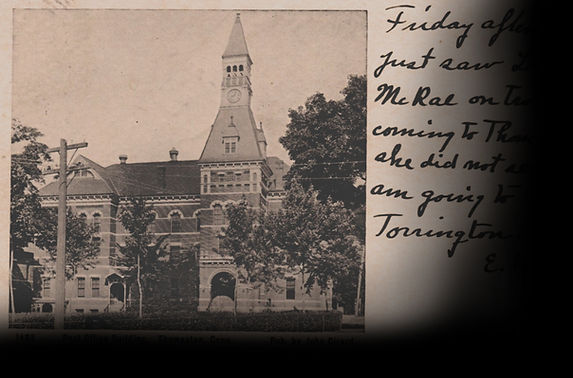
Thomaston Opera House Post Card circa 1918
Audience members in Mezzanine circa 1900


Friends of the Thomaston Opera House is a nonprofit organization passionately dedicated to restoring, preserving, and enhancing this historic venue. Through fundraising, project planning, and active community engagement, Friends ensures that the Opera House remains a vibrant center for arts and culture. As a registered 501(c)(3) organization, all donations are tax-deductible and directly support ongoing restoration efforts
Preserving a Legacy |
Inspiring the Future |
Renowned Contralto | Marian Anderson's Opera House Dedication
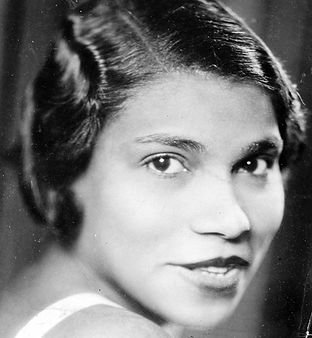

"Make this a beautiful Light House in a sea of those who know not where they are Going- Make this a living thing ...a place that will stand out in this world long after we are gone".
This was the charge that the multi award winning Singer and civil rights pioneer spoke to a packed theater on Sept 14, 1968 as the Special Guest at the Grand Opening Celebration to rededicate the Theater. Shortly after Erin hatch, chairman of the State Historical Commission announced that the Opera House was now a Connecticut Historical Landmark.
Past Famous People on Our Stage


Enrico Caruso
| Italian Tenor
Ignace Paderewski
| Concert Pianist
Polish pianist
Composer, philanthropist, and statesman who became an international spokesman for Polish independence. Rising to prominence as a virtuoso in the late 1880s.
Dramatic Tenor
Enrico Caruso was an Italian operatic tenor, who sang to great acclaim at the major opera houses of Europe and the Americas, appearing in a wide variety of roles. Generally recognized as the first international recording star,
Conrad Nagel
| Stage Star
Ray Bolger
| Stage Star
Amelita Galli-Curci
| Opera Singer
American actor
John Conrad Nagel was an American film, stage, television and radio actor. He was considered a famous matinée idol and leading man of the 1920s and 1930
American actor
Raymond Wallace Bolger was an American film and television actor, vaudevillian, singer, dancer and stage performer who started in the silent film era. He was a major Broadway performer in the 1930s and beyond
Italian opera singer
Amelita Galli-Curci was an Italian lyric coloratura soprano. She was one of the most famous operatic singers of the 20th century and a popular recording artist, with her records selling in large numbers
Source | Thomaston Express digital Archives 1880-1978 | Italians of Waterbury Book : Enrico Caruso March 1920
History of Thomaston - 1975 Rosa Gangloff
When it all Began | Grand Opening Night October 4th, 1884
Architect Benjamin Hill of Waterbury and A.J. & G.S. Chatfield had been contracted
to build a world class Theater

Pauline Markham
(1847-1919)
The First Actress to adorn the brand new Opera House Stage, This statuesque English blonde made her spectacular debut on the American stage as the most magnificent of Thompson's Amazons in the extravaganza "The Black Crook" (1868).
Born to a middle-class London family, Markham's beauty and voice immediately attracted notice and she was originally trained as a operatic soprano. "She had a silvery, bell-like voice, and sang with a beautiful legato line. Yet she found herself the most eye-catching creature in the founding spectacle of American musical comedy. Good hearted, temperamental, and careless of money-" Always a lead, she was at her best in Dramatic roles " She organized the touring troupe of the New York Dramatic Company. Where she starred in the popular
Drama, "The Two Orphans".
Original 1880 Photograph | Thomaston Historical Museum Collection
Courtesy of the New York Historical Society

Original Playbill from Opening Night Oct 4, 1884. Showing Admission Price of 50 cents and the cost of the Theater at $50,000 - a sizable sum at the time. It is hailed as " The best Opera House in the Eastern Country".
Artist Edward Simmons was hired to create the first Scenery backdrops. They included a full backdrop depicting the city of Venice and 13 additional scenes. Simmons was a member of the American Society of Illustrators . He was also considered a contributor to the style known as the American Renaissance, a movement after the American Civil War that stressed the relationship of architecture, painting, sculpture and interior design. *These original scenic pieces are used to help date photographs of the Theater ".
Courtesy of the Thomaston Historical Society


Edward Simmons circa 1880's
Photo coutesy Thomaston Historical Society
Original Venetian Scene drop curtain depicted in 1800's photo with companion painted sets .
Baker, Pratt & Co | Seating
were chosen to provide the ornate seats for the Mezzanine ( as the main Theater was a level floor).
They were prestigious makers of school desks and Opera seats. Their ornate designed Opera seats featured luxurious upgrades for 1884 including under seat Hat Racks that are still there today on many of the original seats in The Opera House Mezzanine.
James Healy and Son | Fresco | Decorative Painting
James Healy and Son was a prominent painting and decorating firm in Bridgeport, Connecticut, noted for undertaking significant projects during the late 19th century. The Beautiful Ornate Ceiling paintwork that is the centerpiece of the Theater, exemplifies the post civil war "Aesthetic Movement"
and victorian "Eastlake Style". Completed around the same time in 1884, the CT Sate Capitol bears
a remarkable resemblance to the Frescoe work in the Theater.
Ceiling Coffers Motif


Thomaston Opera House | Rear Auditorium wall

The Opera House circa 1900 | Gathering for Town wide Harvest Ball
Note | the attendees dressed in costume and the guests in the Mezzanine dressed in formal Victorian wear.

Thomaston Opera House Ceiling
Photo coutesy Thomaston Historical Society
With the Passage of Time | The Need for Restoration
Over the last century, most Opera Houses across the country fell into decay as changing entertainment habits— and the high cost of maintaining ornate historic buildings further accelerated their deterioration, leaving once-grand cultural landmarks in a state of disrepair.
The Thomaston Opera House was spared a worse fate over its many times of closings. The Theater
suffered much damage over it's 140 year life and by the mid century it was badly in need of restoration.
State of the Plaster | Frescoe work prior to restoration work beginning


Extensive Water Damage | Air Ducts and side panels

Boarded sections of damage in Trompe L’Oeil panels

Water damage to theater upper side wall panel


More Water damage | Netting covering damaged plaster in ceiling coffers
Water damage in Trompe L’Oeil panels
plaster damage | Hole cut in Eagle panel for venting
Water damage to corner panels near stage

Restoration begins with stabilizing the structure—securing the roof, halting water intrusion, and assessing hidden damage—so the building can be carefully repaired, preserved, and ultimately brought back to life for future generations.
close up of netting covering ceiling coffers

Scaffolding covering the magnificent Seth
Thomas clock tower. | A major focal point
of the Opera House building. Brand new slate
roof being installed to prior to the interior
plaster and paint work beginning to protect the
final restoration from damage again .


photo credit | Dan Cahill
Phase One- Restoring the Grand Ceiling

EverGreene Architectural Arts led the refurbishment. The Brooklyn-based firm has restored hundreds of historic properties around the country. The first step was to erect a vast array of scaffolding.


Skilled artists carefully mixed 86 specific colors onsite to match the historic paint scheme and replicated missing areas of stenciled designs, swag ornament, and trompe l’oeil motifs to bring the ceiling back to its original beauty.


